Case Study
Head First
Short Narrative Film
A self-initiated short film exploring Irish History and folklore through the language of horror.
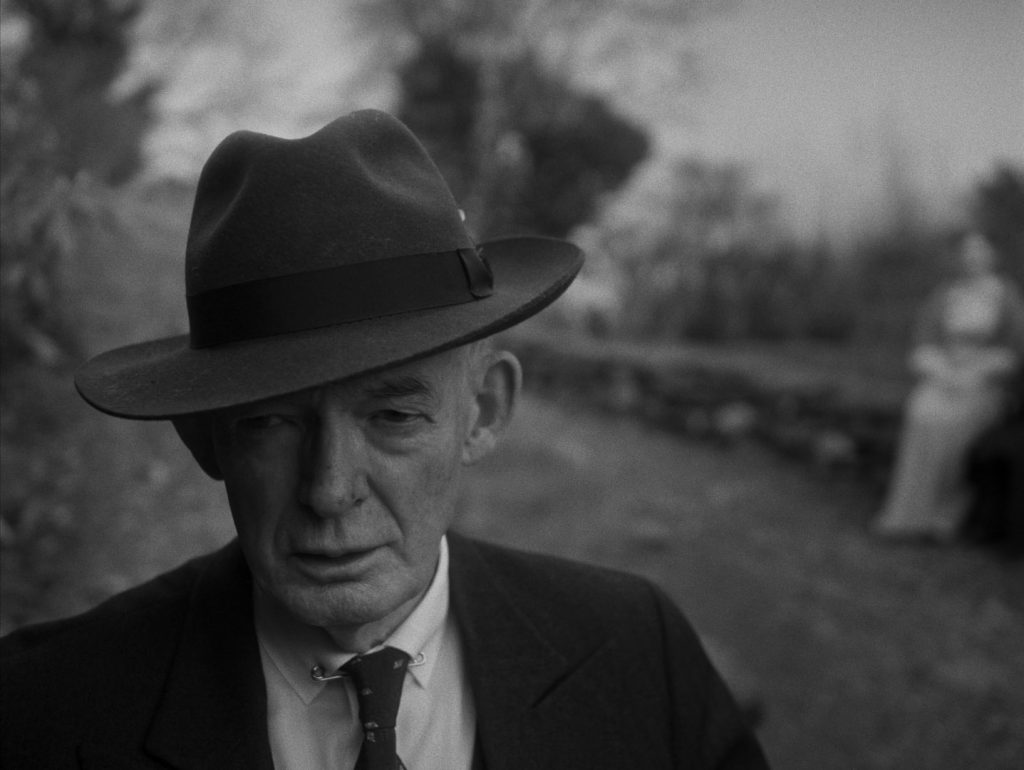
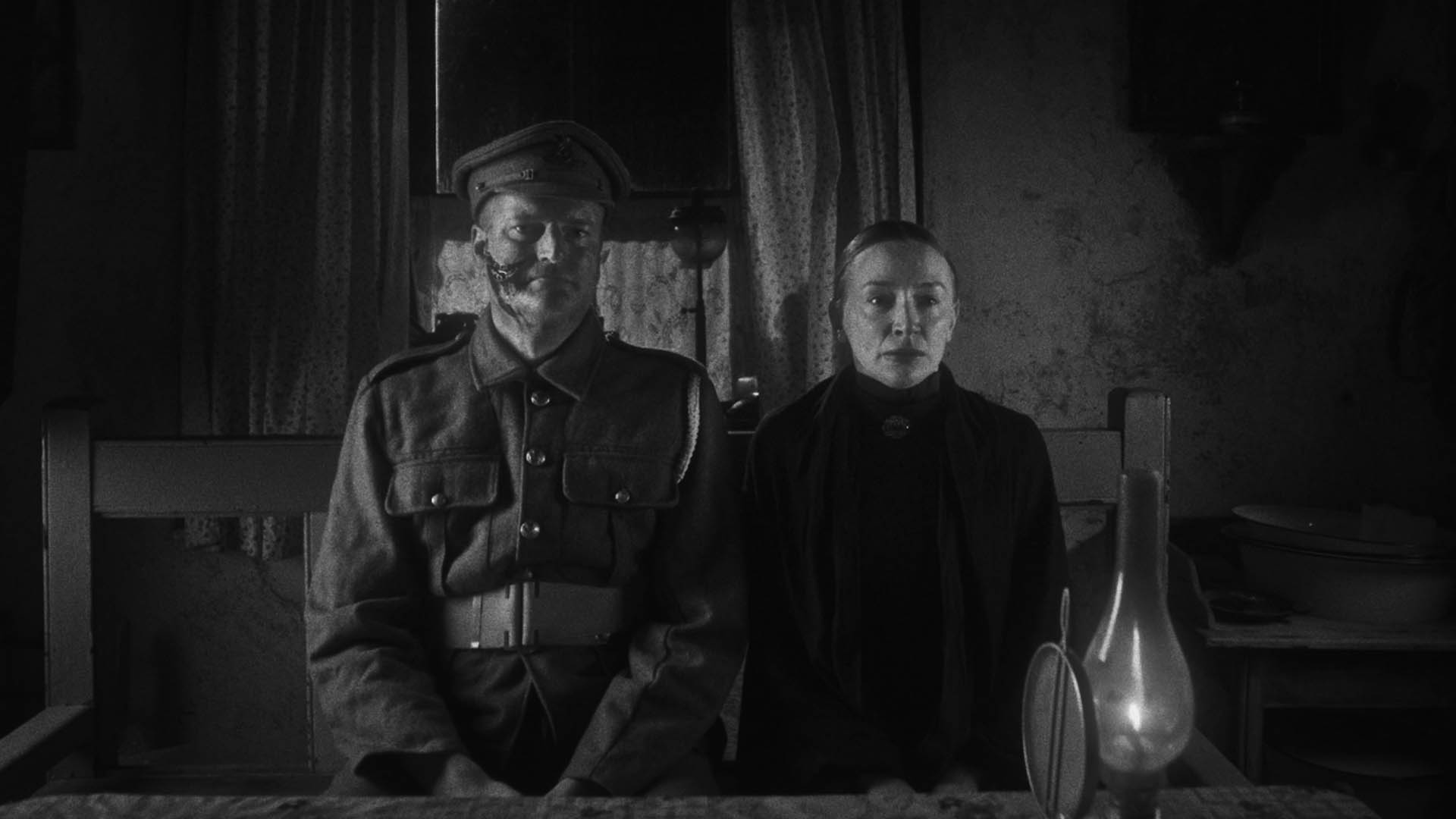
Head first reimagines a traditional wake during the aftermath of World War 1, where breaking an ancient rite unleashes a terrifying consequence.
Overview
Head First is a self-initiated short film developed to explore how Irish history and folklore can be communicated to new audiences through narrative storytelling.
Rather than presenting heritage through traditional or informational formats, the project uses the language of horror to engage audiences – particularly younger viewers – who may not otherwise connect with historical material.
The film was conceived as a “Trojan horse of culture” – where learning is embedded within narrative, and historical detail is absorbed through atmosphere, character, and story rather than instruction.
“A horror short that wields folklore like a blade – precise, unsettling and deeply rooted in place.”
Judges’ Comments
Cork International Film Festival 2025
The Story
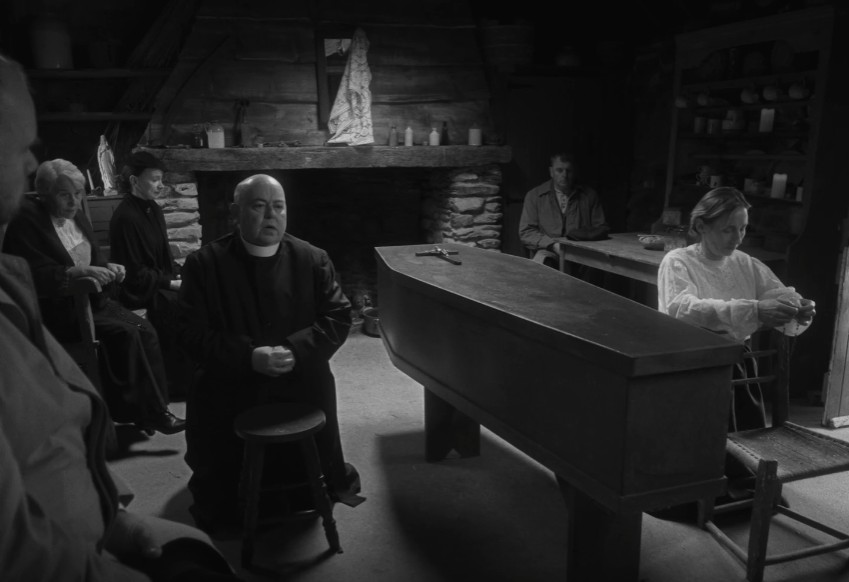
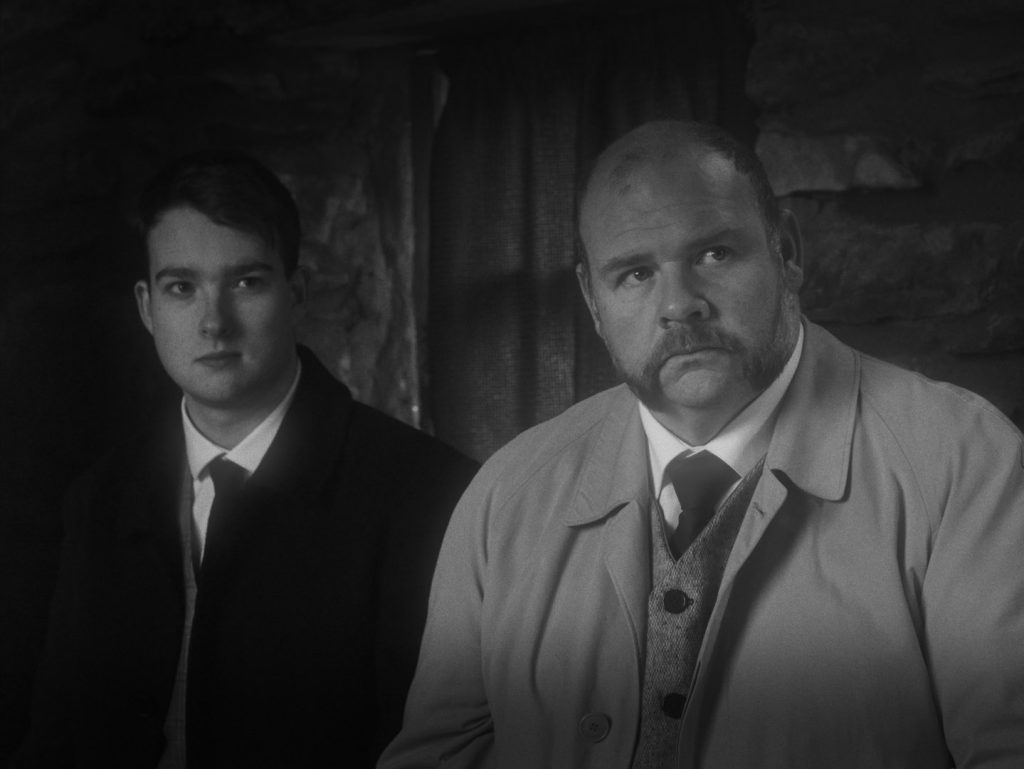
Set during a rural Irish wake, the film draws on traditional death customs and superstitions, centering on the consequences of breaking long-held ritual.
When a coffin is carried from a house “head first” – against tradition – the act disrupts the natural order, opening the door to something darker.
Within this contained setting, the film explores:
- Irish funeral traditions and belief systems
- Rural community dynamics and social hierarchy
- Agrarian tensions around land and inheritance
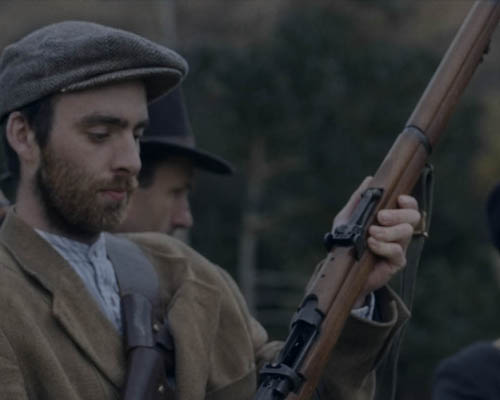
- The psychological aftermath of World War 1
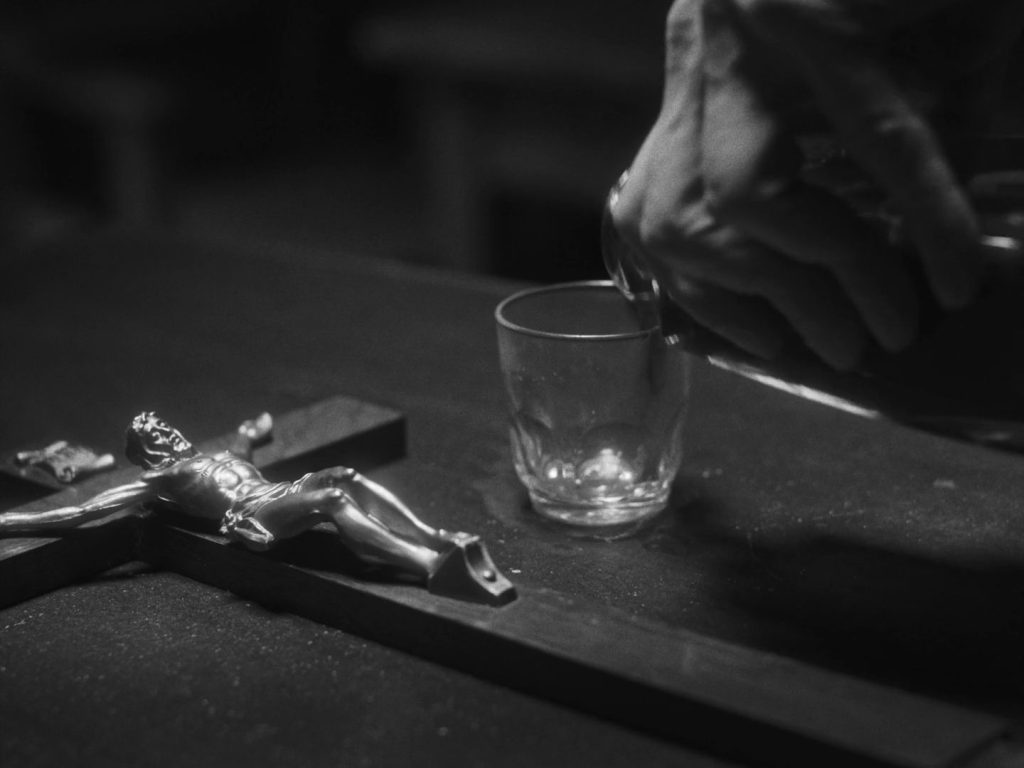
- The intersection of Christian ritual and older pagan superstition
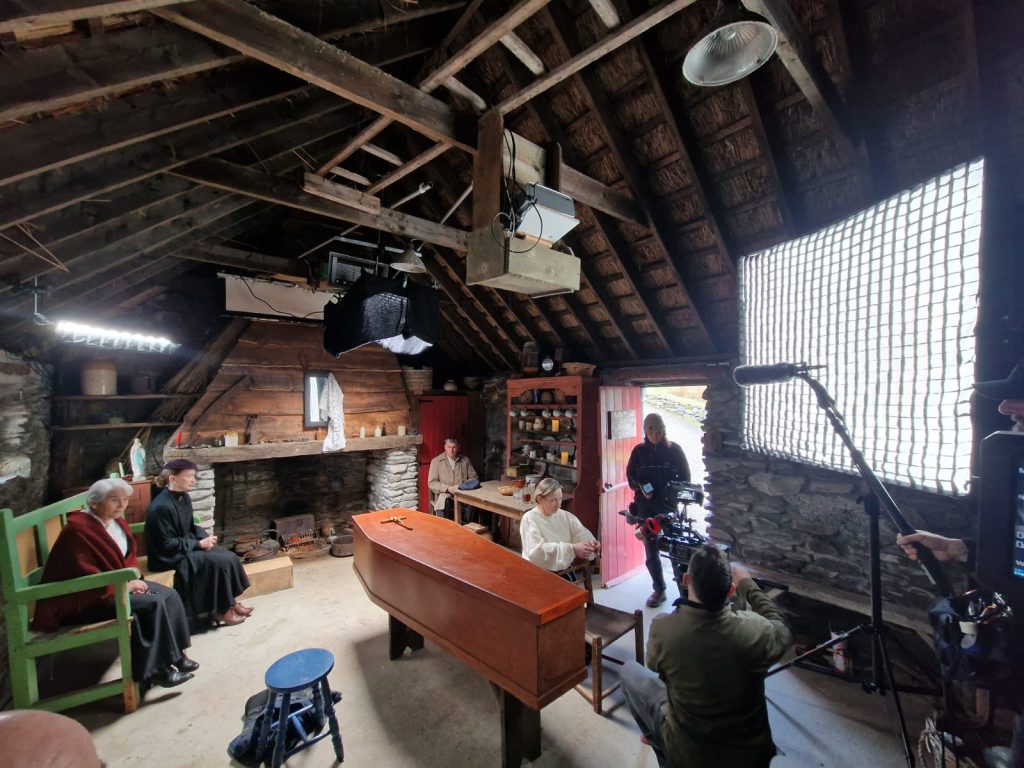
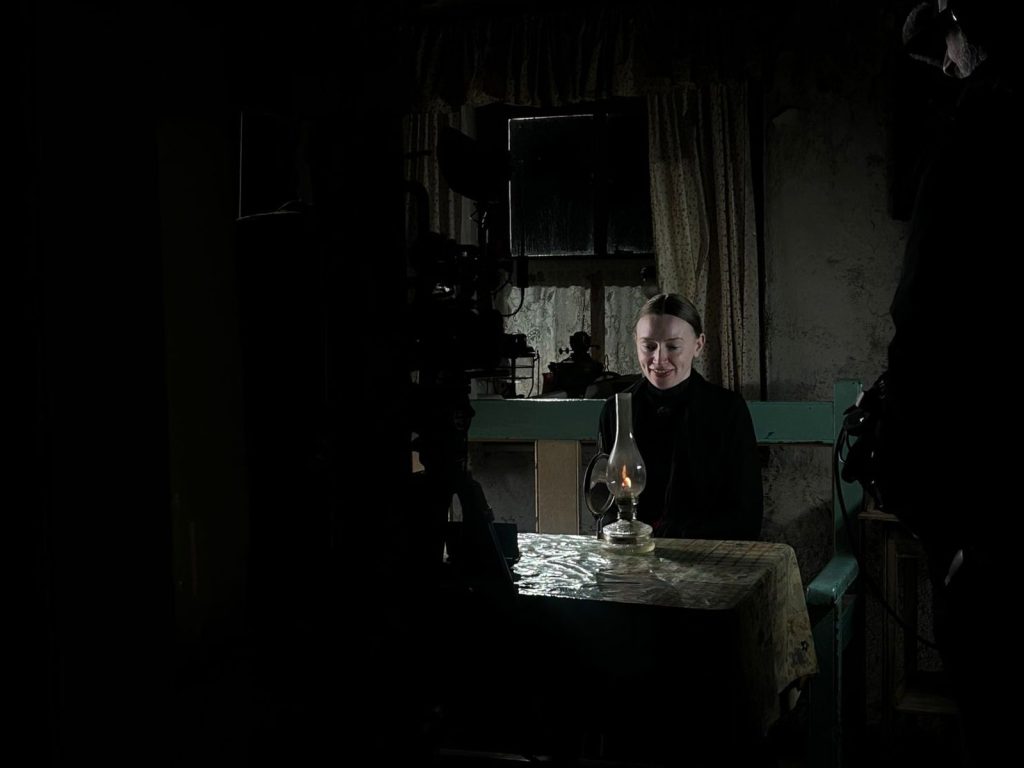
Behind the scenes
Outcome
Head First explored the rituals and atmosphere surrounding the traditional Irish wake through an observational and restrained visual approach.
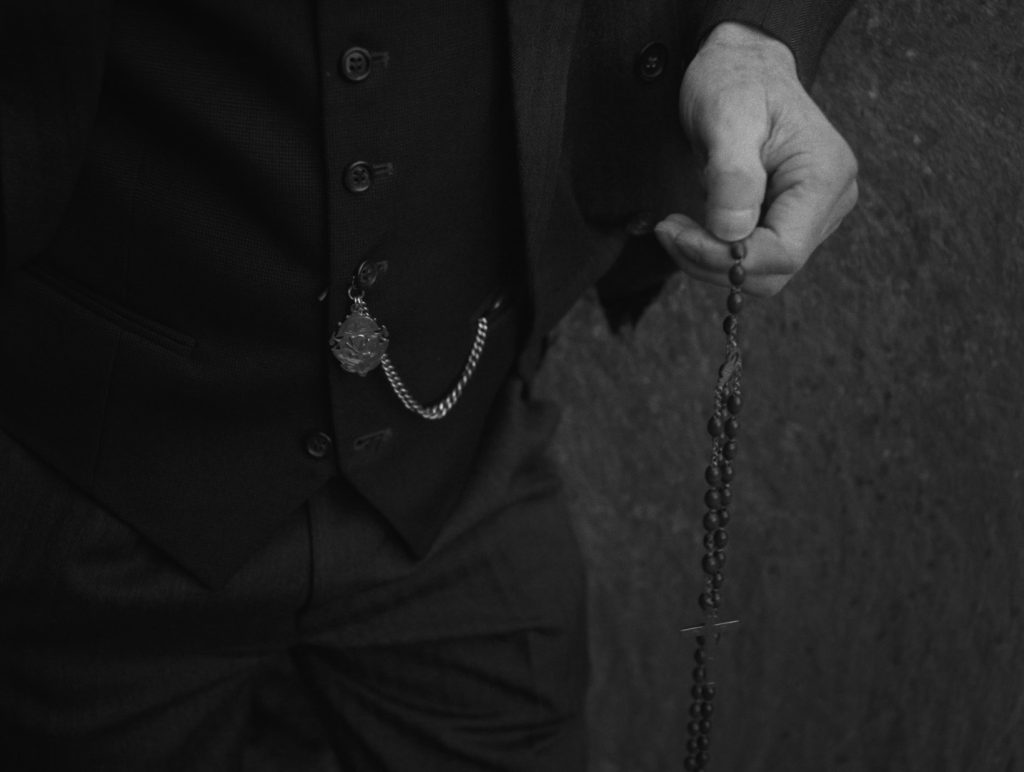
The camera was locked off, reflecting the structure, repetition and formality of religious practice — particularly the rhythm of the rosary itself. Rather than directing the audience through explanation, the film allowed moments to unfold in real time, creating space for immersion within the sound, silence and social behaviours of the wake.
Silence became part of the interpretation. The small gestures, pauses and unspoken reactions between people revealed as much as dialogue itself — reflecting the way grief, ritual and community are often experienced collectively, but expressed quietly.
Rather than presenting the wake as something distant or historical, the film focused on the enduring human behaviours and shared experiences that still resonate within Irish life today.
Story as Interpretation
A short film about how story creates a human doorway into history.
Watch the film (2:28)